
Amazon Associates Disclosure We are a participant in the Amazon Services LLC Associates Program, an affiliate advertising program designed to provide a means for us to earn fees by linking to Amazon.com and affiliated sites.
Most Popular Beans: How to Sort, Soak, and Cook
Ever wonder why some of the simplest foods have been around the longest? Dried beans, those unassuming little pebbles, have nourished folks for thousands of years. From Pharaoh’s tombs to your pantry, they pack a massive punch of protein for minimal cost. Discover just how good different types of beans can be for you.
Sorting Beans: For Tasty, Trouble-Free Cooking
Here, you’ll find details on various beans and legumes, like kidney beans, butter beans, and chickpeas, as well as their taste, textures, and the best ways to cook them. Get to know how long to cook them on the stove or in a pressure cooker, whether you’ve soaked them first or not. This makes cooking with beans easy and ensures delicious meals.
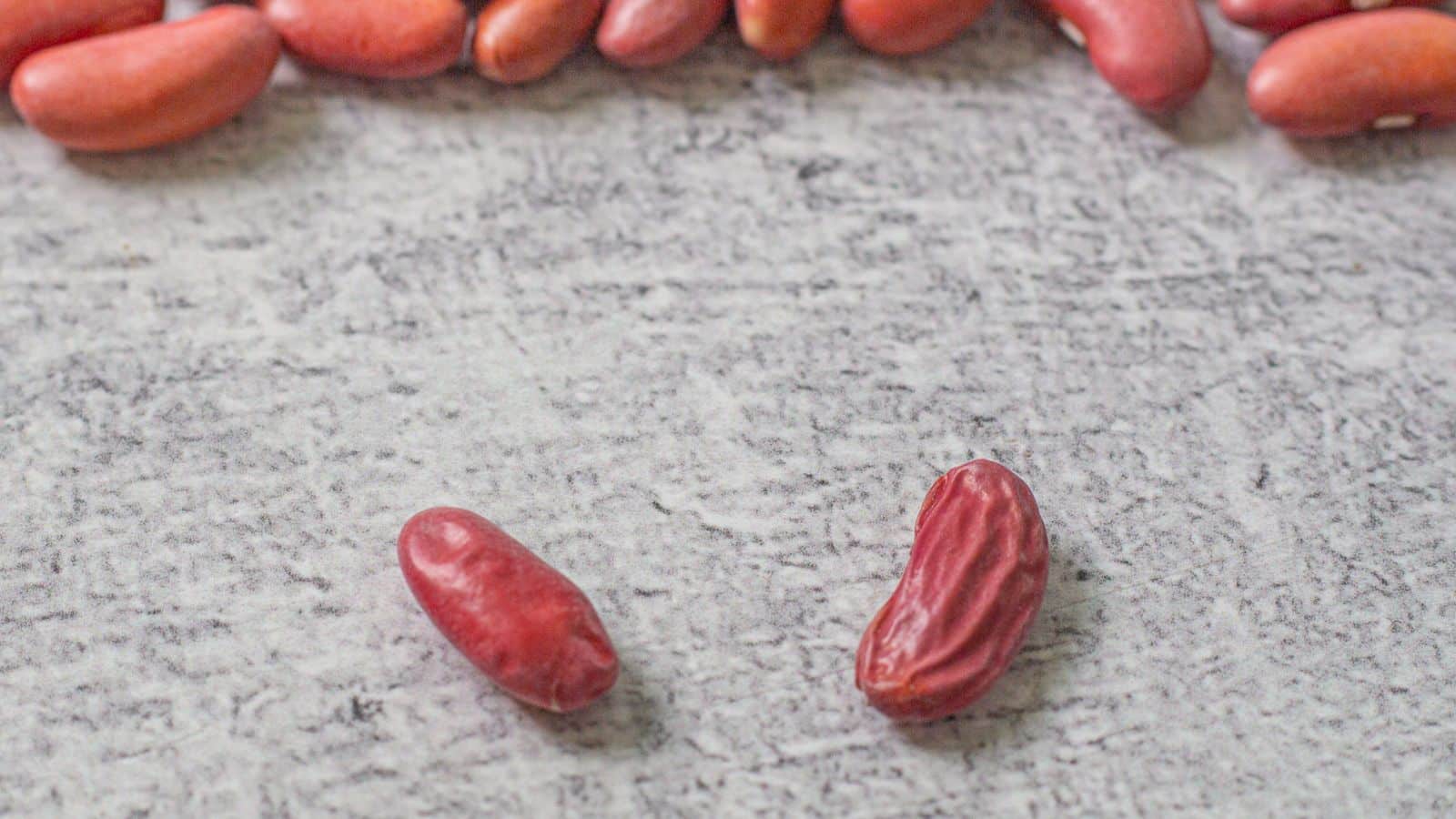
Taking just a few minutes to sort dried beans makes a world of difference! Avoid unexpected hard bits in your dish and achieve perfect texture with these simple steps:
What to Look For:
Tiny Stones: Sometimes, sneaky pebbles make their way in. You don’t want to find those under your teeth!
Shriveled-Up Beans: These won’t cook properly and will feel unpleasantly tough in your finished dish.
Dust: While not always visible, rinsing eliminates this after sorting.
The Easy Sorting Method:
Spread Them Out – Use a baking sheet or any light-colored surface so odd things stand out.
Inspect & Remove – Scan your beans and pick out anything out of place. Discard anything shriveled or debris-like.
Rinse Well – Transfer sorted beans to a colander or strainer and rinse with clean water.
Now you’re ready to cook consistently delicious beans without any unpleasant surprises!
Why Soak Beans?
- Reduced Gas and Discomfort: Beans contain complex sugars called oligosaccharides that our bodies struggle to break down. Soaking initiates the breakdown process, making beans easier and less likely to cause digestive issues.
- Improved Cooking: Soaked beans cook more evenly and in less time than un-soaked beans. This saves you energy and ensures that your beans achieve a tender, delightful texture.
- Better Flavor: Some gas-causing compounds in beans also hold bitter flavors. Soaking helps to release these, resulting in more flavorful, less bitter beans.
- Removal of Anti-nutrients: Soaking beans helps neutralize phytates and lectins. These anti-nutrients can block the absorption of certain minerals.
How to Soak Beans
There are two main methods for soaking beans:
Traditional Overnight Soak
- Sort and rinse your beans, removing any debris or damaged beans.
- Place the beans in a large bowl and cover them with plenty of cold water (at least 3 inches above the beans).
- Soak for 8-12 hours, ideally in the refrigerator.
- Drain, rinse, and proceed with cooking.
Quick Soak Method
- Sort and rinse the beans as above.
- Place the beans in a pot and cover with plenty of water.
- Bring to a rapid boil and cook for 2-3 minutes.
- Remove from heat, cover, and let soak for at least 1 hour.
- Drain, rinse, and cook.
Important Tips
- Discard Soaking Water: Always discard the soaking water and cook beans in fresh water.
- Exceptions: Lentils, split peas, and black-eyed peas typically don’t require soaking.
Soaking beans is a simple technique that has significant benefits. Prioritize this step for optimal digestion, flavor, and cooking results. Embrace delicious, well-cooked beans every time!
Common Beans
Kidney Beans
These classic deep red beans have a mild, slightly sweet flavor that pairs well with many dishes. Their tender, creamy texture holds its shape well after cooking, making them a favorite for chili, soups, stews, curries, and more.
- Appearance: These classic beans showcase a beautiful deep red color and their signature kidney shape. They range in size, with larger ones better for long-simmered dishes.
- Flavor: Kidney beans deliver a mild, sweet flavor with gentle, earthy notes. This makes them highly adaptable to numerous cuisines and flavor profiles.
- Texture: When cooked, they develop a tender, creamy texture while holding their shape well. This versatility makes them a popular choice for dishes where you want distinct beans.
- Ideal for: Kidney beans are the quintessential chili bean! They also excel in soups, stews, curries, rice dishes, and salads. You can even find them in sweet Asian preparations like red bean paste.
- Stovetop Cooking Times:
- Soaked: 45-90 minutes
- Unsoaked: 90-120 minutes
- Pressure Cooker Times:
- Soaked: 20-30 minutes
- Unsoaked: 30-40 minutes
Pinto Beans
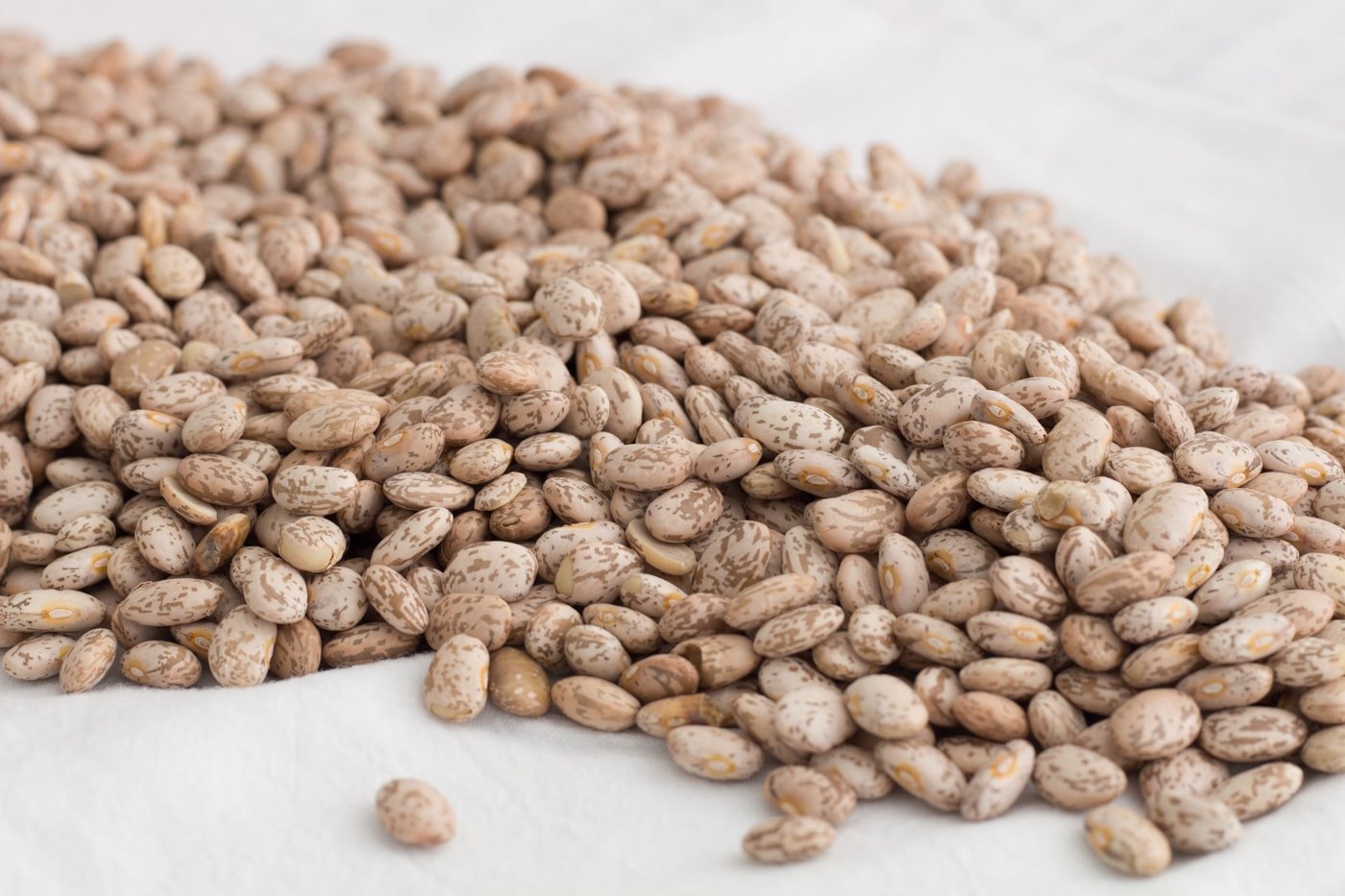
Known for their beige color with brown speckles, pinto beans have a rich, nutty, and earthy flavor. They become beautifully soft and creamy when cooked, making them ideal for refried beans, Mexican dishes, soups, and dips.
- Appearance: Pinto beans have a beige background with distinctive brown speckles. Their speckled appearance is where they get their name – ‘pinto’ means ‘painted’ in Spanish.
- Flavor: These beans offer a robust, earthy, and nutty flavor, making them the star of bold, Southwestern-style dishes.
- Texture: Pinto beans become incredibly soft and creamy when cooked, ideal for creating flavorful refried beans.
- Ideal for: Refried beans are certainly their claim to fame. You’ll also find them in burritos, Mexican-flavored dishes, soups, stews, dips, and chili.
- Stovetop Cooking Times:
- Soaked: 60-90 minutes
- Unsoaked: 2-3 hours
- Pressure Cooker Times:
- Soaked: 15-20 minutes
- Unsoaked: 30-40 minutes

Butter Beans (Lima Beans)
Ranging from pale green to creamy white, butter beans have a rich, starchy flavor. When cooked, they develop a silky, melt-in-your-mouth texture, perfect for succotash, casseroles, soups, stews, and dips.
Some may argue that lime beans and butter beans are not the same bean, but even Camellia believes them to be one and the same.
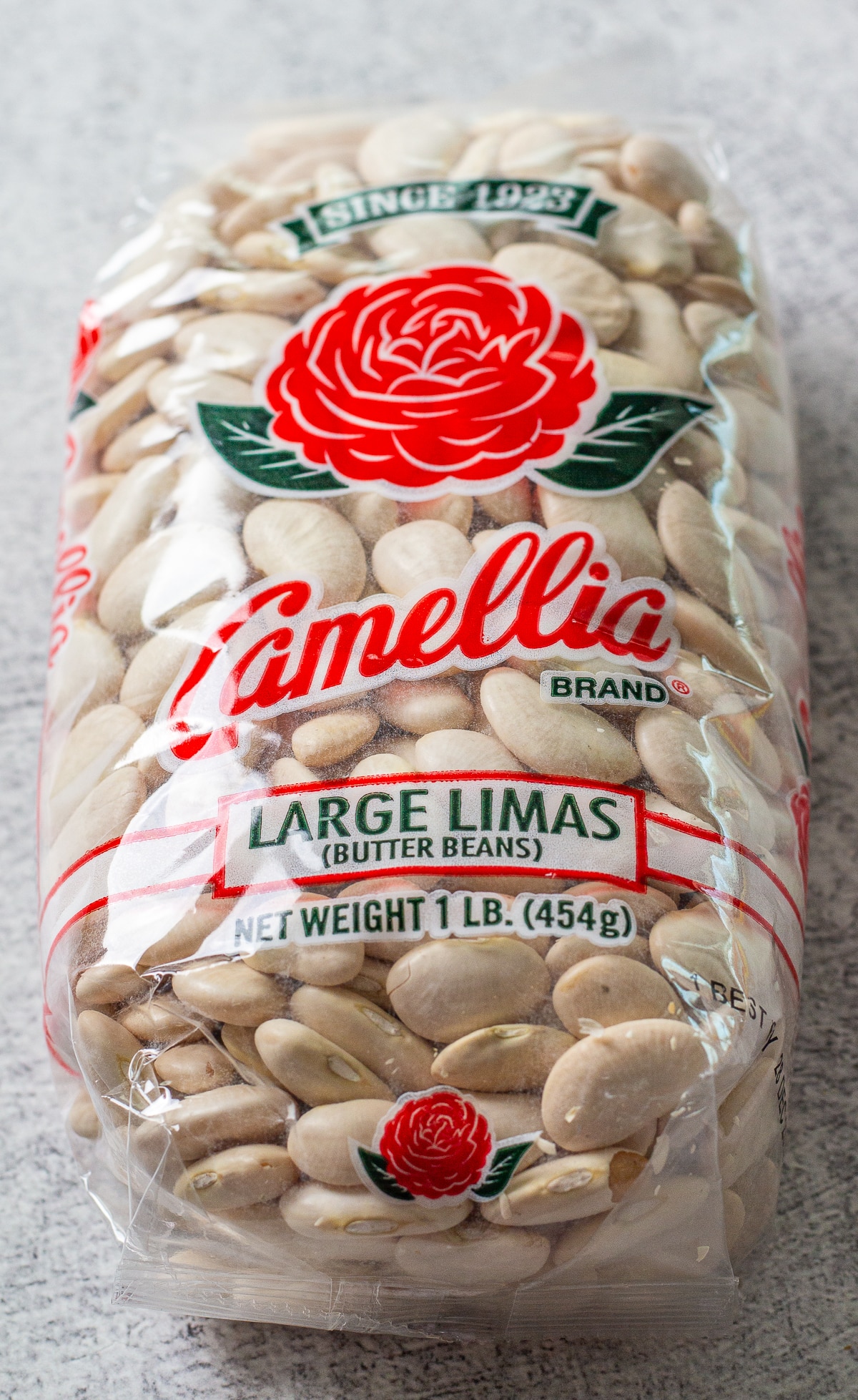
- Appearance: Butter beans range in color from pale green to creamy white and come in both large (‘Fordhook’) and smaller (‘baby lima’) varieties. Their flattened, curved shape sets them apart.
- Flavor: As their name suggests, butter beans have a luscious, starchy, and buttery flavor that adds a distinctive richness to dishes.
- Texture: When cooked, butter beans develop an incredibly smooth, creamy, almost melt-in-your-mouth texture.
- Ideal for: Lima beans shine in Southern Butter Beans, succotash (a mix of corn, beans, and sometimes other vegetables), casseroles, soups, and stews. Their creamy texture also makes them delightful in dips and purées.
- Stovetop Cooking Times:
- Soaked: 45-60 minutes
- Unsoaked: 60-90 minutes
- Pressure Cooker Times:
- Soaked: 10-15 minutes
- Unsoaked: 20-25 minutes
Chickpeas (Garbanzo Beans)
Chickpeas are round, beige, and have a nutty, slightly sweet flavor. They have a firm yet somewhat grainy texture that stands up well in various dishes. They’re the foundation for hummus and falafel and shine in curries, soups, salads, and roasted snacks.
- Appearance: Round, slightly lumpy shape with a characteristic beige color. Size can vary between smaller ‘desi’ type chickpeas and larger ‘Kabuli’ chickpeas.
- Flavor: Chickpeas have a mildly nutty, sweet, and slightly earthy taste. This versatility allows them to blend well with numerous seasonings and culinary traditions.
- Texture: Cooked chickpeas have a firm yet slightly grainy texture that remains distinct and doesn’t turn mushy, making them incredibly versatile.
- Ideal for: The foundation of hummus and falafel! They’re also fantastic in curries, soups, salads, and stews, making surprisingly delicious roasted snacks.
- Stovetop Cooking Times:
- Soaked: 60-90 minutes
- Unsoaked: 2-3 hours
- Pressure Cooker Times:
- Soaked: 10-15 minutes
- Unsoaked: 20-25 minutes
Navy Beans
Small, white, and oval-shaped navy beans have a mild flavor that readily absorbs other flavors. They cook up soft and creamy, making them perfect for baked beans, soups, and stews.
- Appearance: These beans are known for their small, white, oval shape. They get their name not from their appearance but because they were a main staple of the US Navy diet in the past.
- Flavor: Navy beans are remarkably mild, with a subtly sweet and adaptable flavor that quickly absorbs the seasonings of whatever dish they’re added to.
- Texture: These beans are soft and creamy, making them the perfect base for smooth purees and dips.
- Ideal for: Ham and beans and baked beans are their hallmark preparations. They are also superb in soups, stews, and other applications with a desired soft, creamy texture.
- Stovetop Cooking Times:
- Soaked: 60-90 minutes
- Unsoaked: 2-3 hours
- Pressure Cooker Times:
- Soaked: 10-15 minutes
- Unsoaked: 20-30 minutes
Great Northern Beans
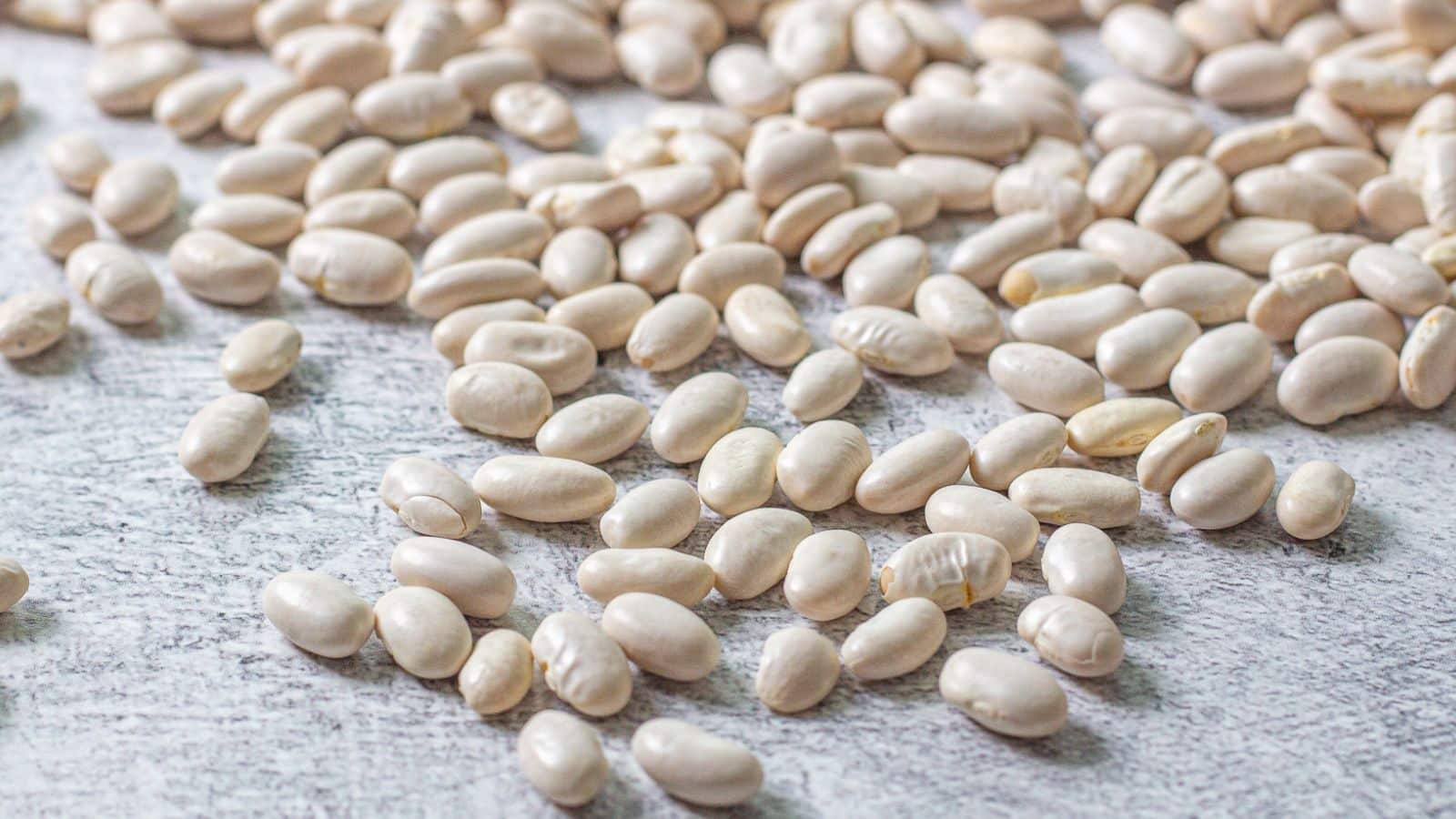
These medium-sized white beans have a delicate, nutty flavor. They soften beautifully while holding their shape well, making them great for soups, casseroles, dips, salads, and vegetarian chili.
- Appearance: Medium-sized, white, and oval-shaped with a slightly flattened look.
- Flavor: Delicate, mild, and slightly nutty, offering a clean flavor profile that works well in various dishes.
- Texture: Soft, creamy, and hold their shape moderately well when cooked, offering some textural presence.
- Ideal for Soups, casseroles, dips, salads, and vegetarian chili, especially white chicken chili variations.
- Stovetop Cooking Times:
- Soaked: 45-60 minutes
- Unsoaked: 90-120 minutes
- Pressure Cooker Times:
- Soaked: 10-15 minutes
- Unsoaked: 20-25 minutes
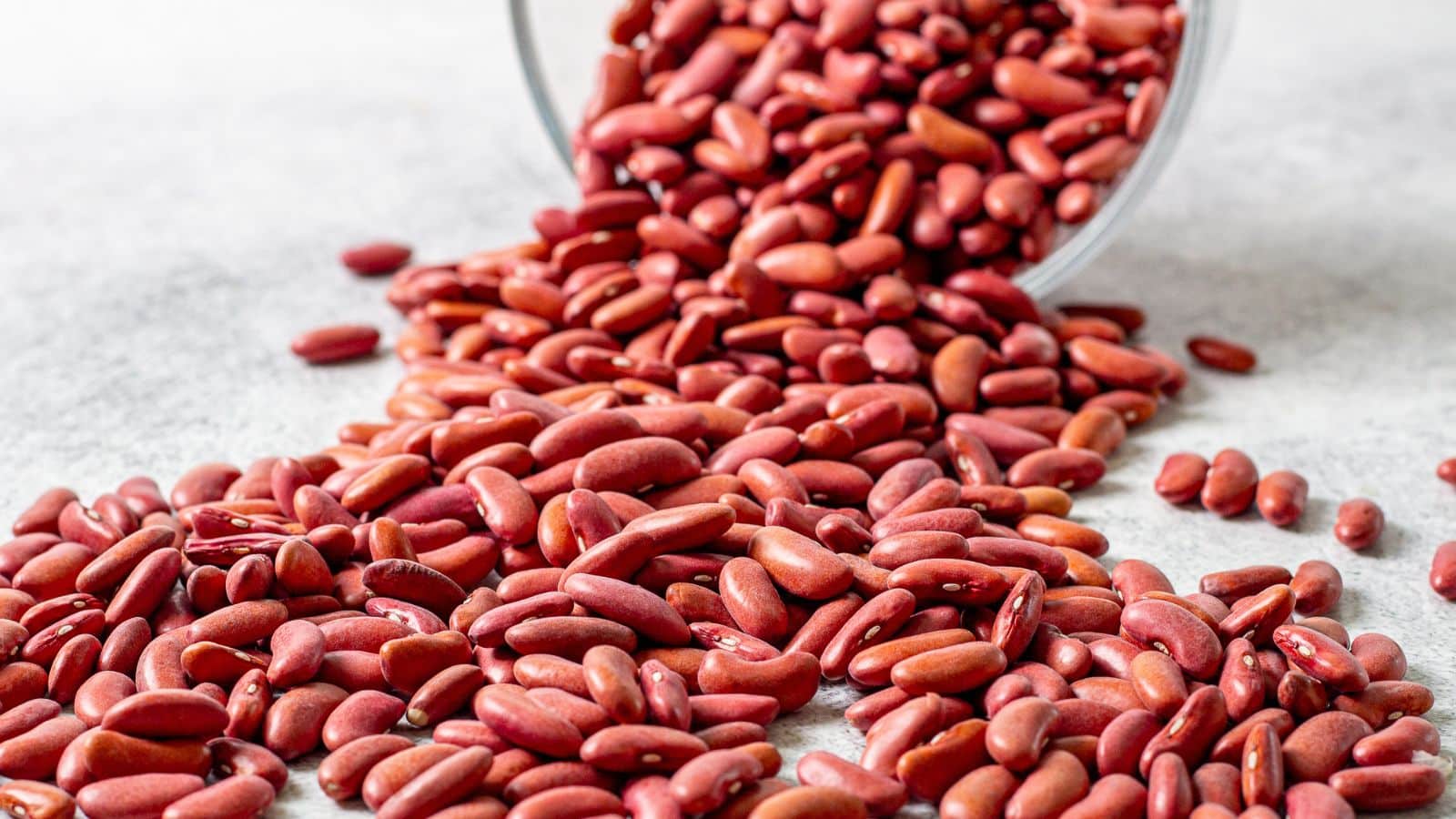
Red Beans
Red beans offer a savory flavor and are smaller and brighter red than kidney beans. Their firm texture works well in Red Beans and Rice, soups, stews, and Caribbean dishes.
- Appearance: Smaller and slightly brighter red than kidney beans, often with a more rounded shape.
- Flavor: Savory and slightly sweet, bringing a unique flavor to your cooking.
- Texture: Holds shape remarkably well during cooking, with a slightly less creamy texture than kidney beans.
- Ideal for: The star of Red Beans and Rice! Their firm texture also makes them great in soups, stews, Caribbean, Cajun and Creole dishes, and curries.
- Stovetop Cooking Times:
- Soaked: 60-90 minutes
- Unsoaked: 2-3 hours
- Pressure Cooker Times:
- Soaked: 15-20 minutes
- Unsoaked: 30-40 minutes
Black Beans
These shiny black beans have an earthy, slightly smoky flavor. They become dense and meaty when cooked, making them a favorite in soups, stews, burritos, veggie burgers, dips, and salads.
- Appearance: Small to medium-sized, shiny black beans with a distinctive oval shape.
- Flavor: Earthy, slightly sweet, and subtly smoky, bringing depth and complexity to dishes.
- Texture: Dense and meaty when cooked, holding their shape well without becoming mushy.
- Ideal for: Soups, stews, burritos, veggie burgers, dips, and salads. Their robust flavor and vibrant color make them a showstopper!
- Stovetop Cooking Times:
- Soaked: 60-90 minutes
- Unsoaked: 2-3 hours
- Pressure Cooker Times:
- Soaked: 10-15 minutes
- Unsoaked: 20-25 minutes
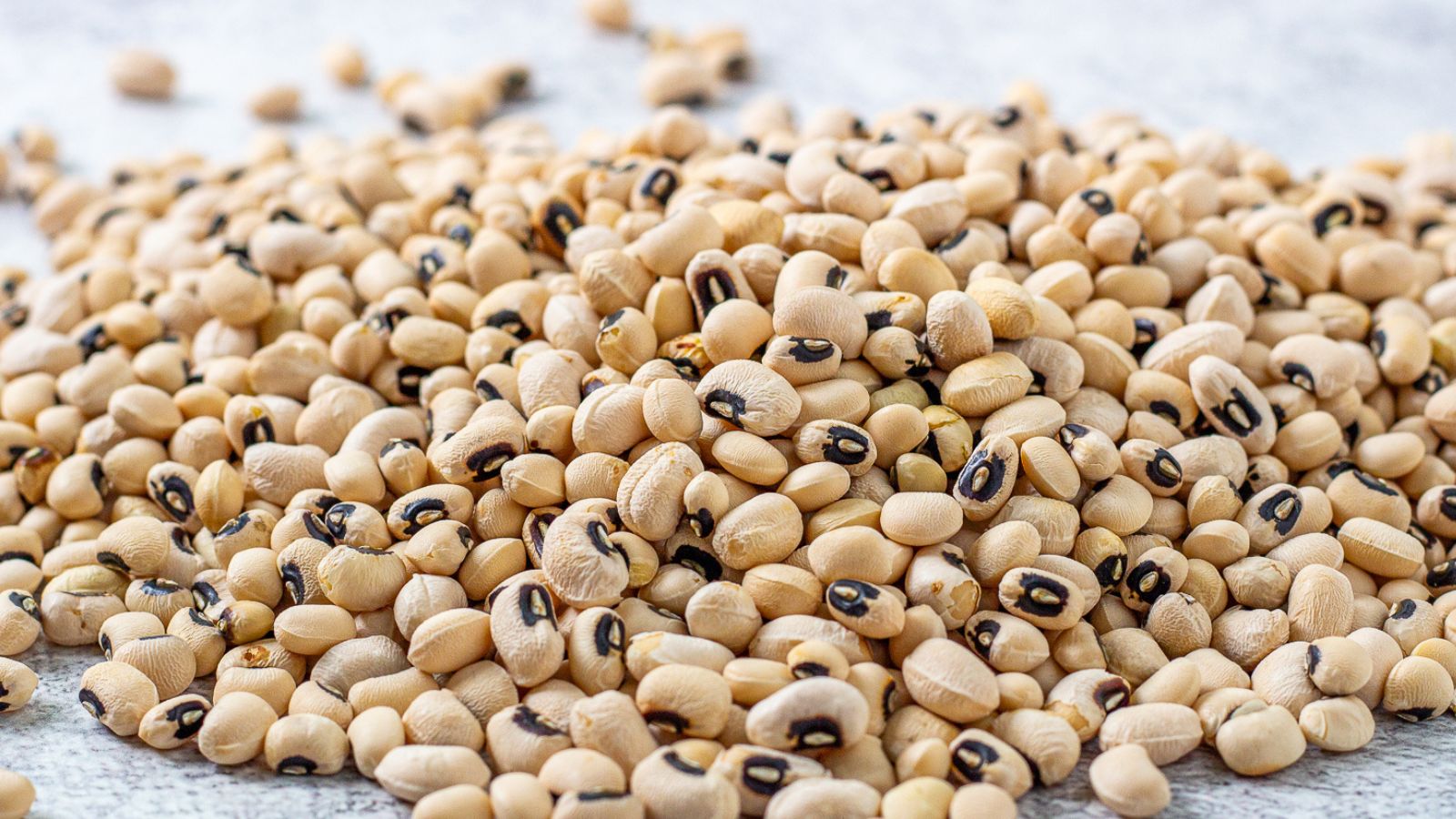
Black-eyed Peas
Small and creamy with a distinctive black spot, these beans have an earthy flavor. They cook softer than most beans but still hold their shape, ideal for soups, stews, and the traditional New Year’s dish Hoppin’ John.
- Appearance: Small, creamy white beans with a distinctive black spot, giving them their name.
- Flavor: Earthy and slightly savory, with a unique flavor profile offering a delightful twist to traditional recipes.
- Texture: Cook up softer than most beans but hold their shape reasonably well.
- Ideal for Soups, stews, and the Southern classic Hoppin’ John dish, often featuring collard greens and rice.
- Stovetop Cooking Times:
- Soaked: 60-90 minutes
- Unsoaked: 2 hours
- Pressure Cooker Times:
- Soaked: 10-15 minutes
- Unsoaked: 20 minutes
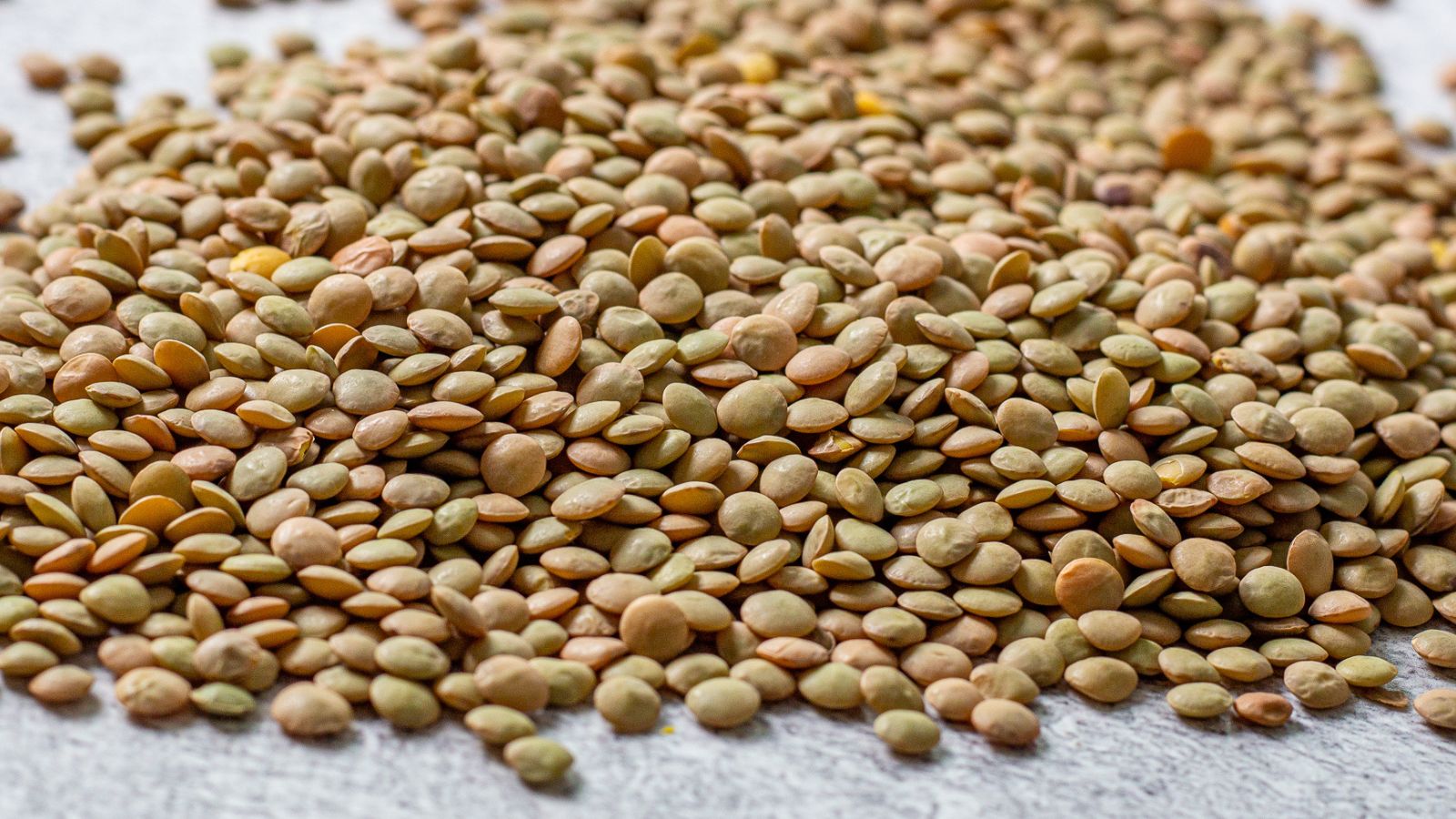
Lentils
These tiny disc-shaped legumes come in green, brown, red, and black varieties. They cook quickly without soaking and offer a range of textures from tender to firm. Lentils are fantastic in soups, stews, salads, and vegetarian dishes.
- Appearance: Tiny, disc-shaped legumes that come in various colors, including green, brown, red, and black.
- Flavor: Flavor varies depending on the lentil type. Generally, lentils have an earthy, subtly nutty taste that complements an array of cuisines.
- Texture: Cook up quickly without soaking. Textures range from tender (red lentils) to firmer and intact (green/brown lentils).
- Ideal for Soups, stews, salads, vegetarian patties, and as a side dish. Their quick cooking time makes them a weeknight staple!
- Stovetop Cooking Times:
- Green/Brown Lentils: 20-30 minutes
- Red Lentils: 15-20 minutes
- Pressure Cooker Times:
- Green/Brown Lentils: 5-7 minutes
- Red Lentils: 2-3 minutes
Remember: Cooking times are guidelines – bean freshness and size can cause slight variations. Always check for tenderness!