
Amazon Associates Disclosure We are a participant in the Amazon Services LLC Associates Program, an affiliate advertising program designed to provide a means for us to earn fees by linking to Amazon.com and affiliated sites.
How to Make Caramelized Onions


Everything you need to know about making perfect caramelized onions, from cutting, peeling, and cooking is right here.
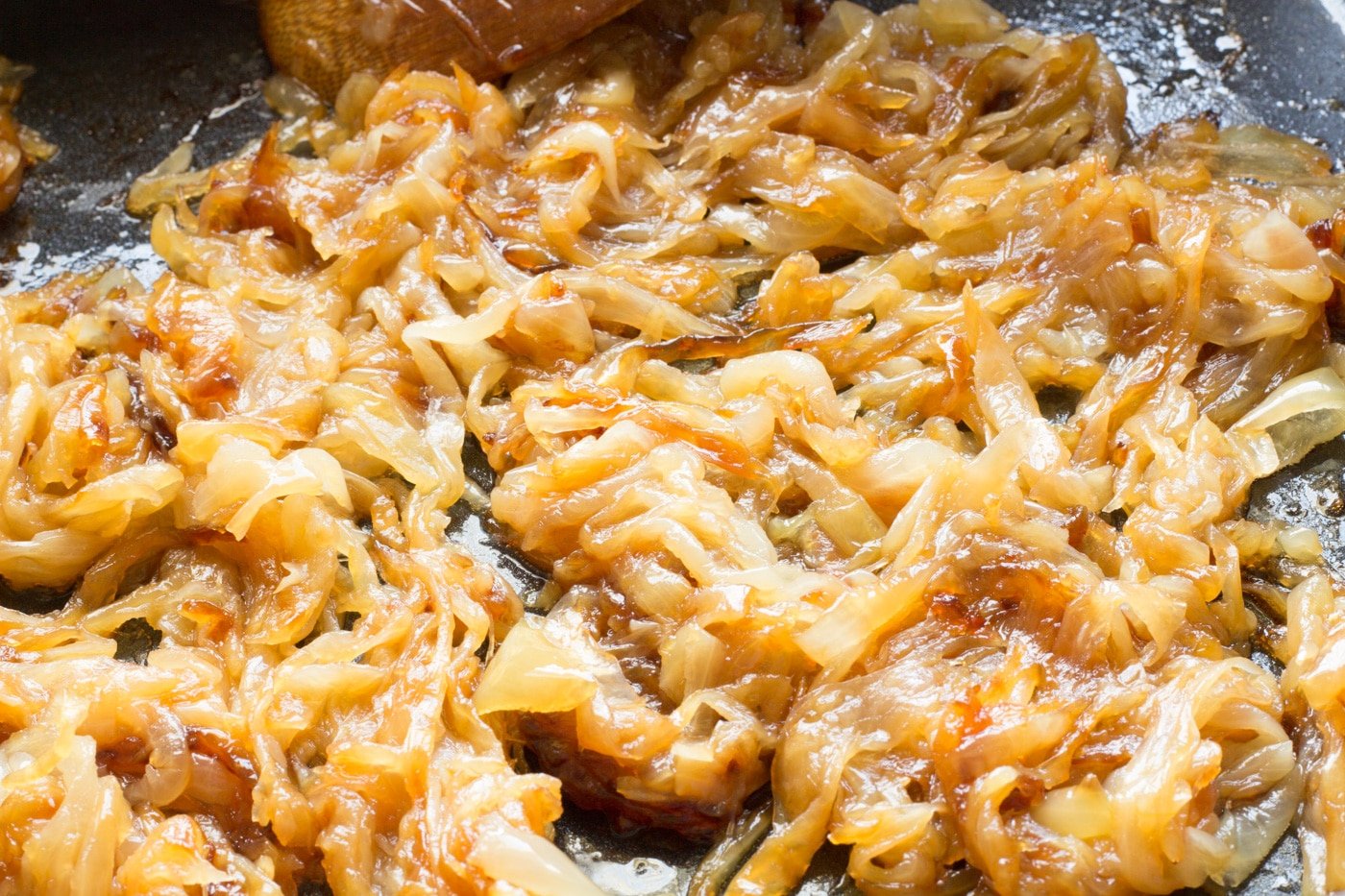
Perfect caramelized onions are easy to make when you follow a few simple rules.
The first thing you need to know is that there is a huge difference between caramelized onions, fried onions, and sautéed onions.
Sautéed onions are what you find on Philly Cheesesteaks and sometimes they are served with fajitas. Sauteed onions will not be anywhere near as sweet and will have more onion flavor.
If you want super dark kind of crispy onions, this is not the route you are looking for. You want fried onions.
Fried onions are generally sliced super thin and deep-fried or skillet cooked quickly over super-high heat. I am not talking about onion rings that are battered and deep-fried.
Low heat and slow cooking are the only way you are ever going to achieve deep brown sweet and savory caramelized onions. There are no shortcuts.
If you do this the right way, low and slow, there is no need for adding sugar. There is more than enough sugar in onions if you slow cook them.
Choosing Onions
White onions, yellow onions, red onions, Spanish onions, and Vidalia onions are all great choices for caramelized onions.
I would caution you on the use of red onions. If you are going to use them in French Onion soup, they might make your broth a weird color.
I don’t waste money buying Vidalia onions for this. Plain yellow or white will work just fine.
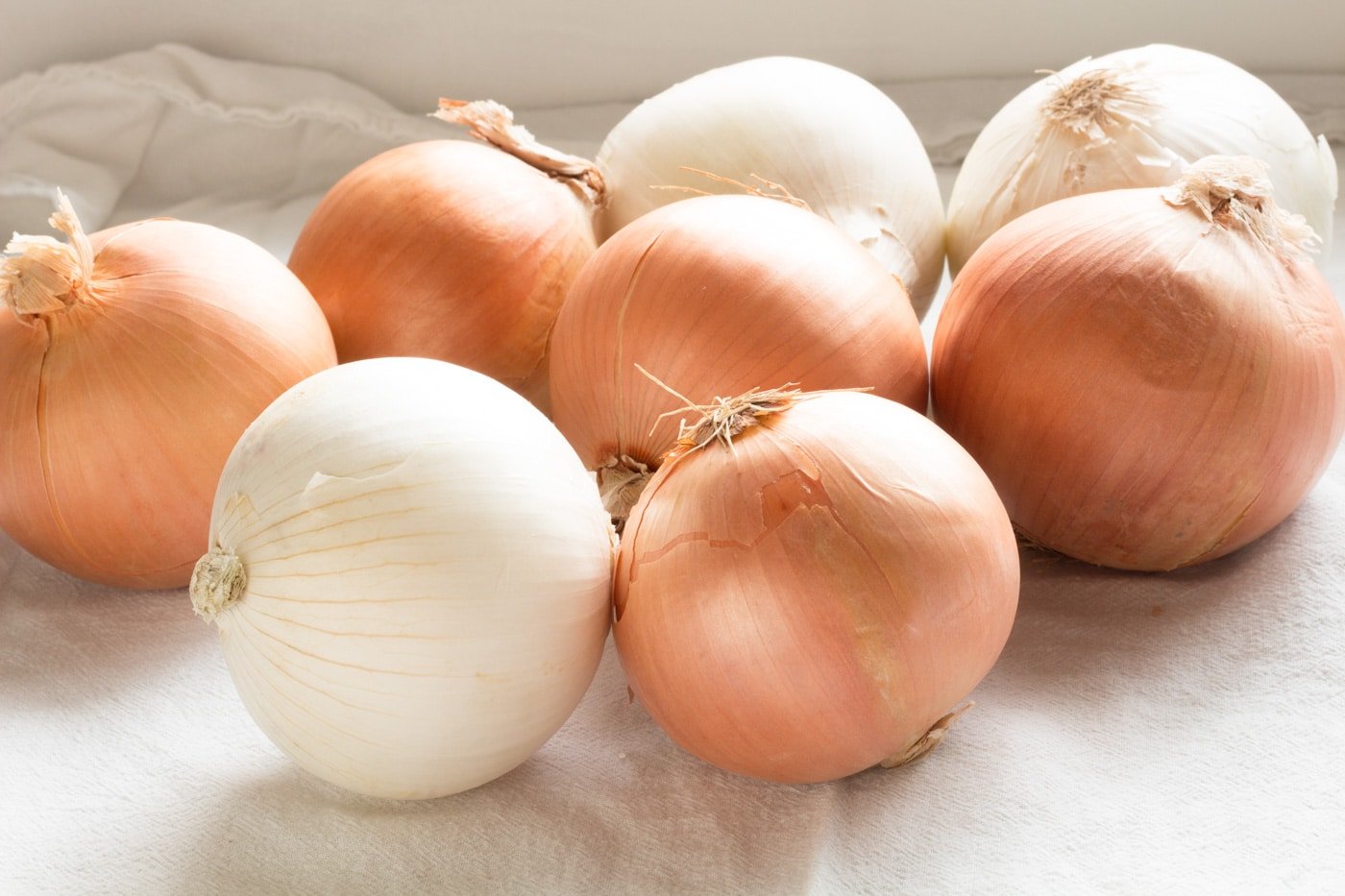
How Many Onions
The amount of onions you will need to start with is going to be influenced by how much you need at the end.
I would recommend that you start with at least 2 to 3 large onions so that none of the onions spend too much time on the bottom of the pan during the beginning stages of cooking.
2 extra-large onions will give you about 8 to 10 cups of sliced raw onions that will give you about 1 cup of caramelized onions.
Peel an Onion
I find the easiest method for peeling an onion is to cut it in half from the top to the root end, lay it cut side down, and then cut off the top and bottom.
Now you can get ahold of the skin.
Remove the outer skin.
You also need to remove the super-thin onion layer that is right under the skin. Large onions tend to have an extra layer that will cook into tough pieces.
If you have ever eaten an onion ring and the onion was just too tough to eat, it is because someone did not remove that thin layer.
That thin layer is actually trying to turn into a paper skin.
If I am peeling an onion for something that needs rings, like onion rings or placing on burgers, I cut off the top and root end. Then I use my knife to cut through the skin and at least one layer of the onion. Then I get my fingers into that cut and pull the cut layers off.
Slicing Onions
Make sure you are in a well-ventilated area. Slicing a lot of onions in one spot is going to produce a whole lot of sulfur compounds. There will be tears.
Using a peeled onion, cut the onion in half and lay on cut side down onto a cutting board.

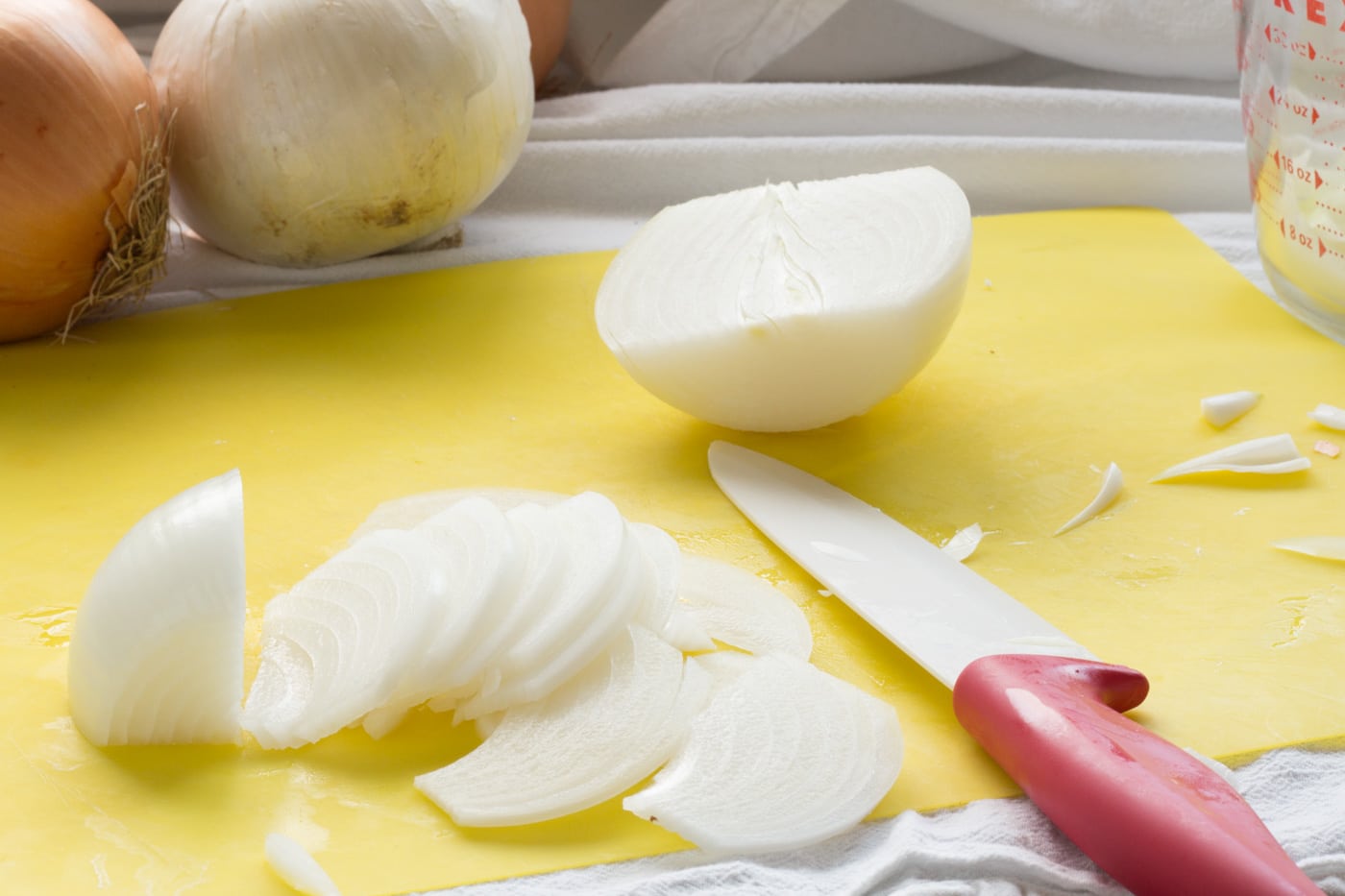
Start slicing the onion from a side, you do not want to slice these into half-moons or rings, these will be too long and appear stringy after cooking.
You are looking for thin slivers of onion pieces about 1/4 of an inch thick.
Slow cooking gives the onions times to break down the sugars without burning them.
Electric Skillet Method
Using an electric skillet is my preferred method. I can set the heat without guessing or adjusting the temperature later.
Set an electric skillet to 200 ⁰F and add the oil and allow the oil to heat up. Side note: if you are going to use these in French onion soup, add a couple of tablespoons of butter.
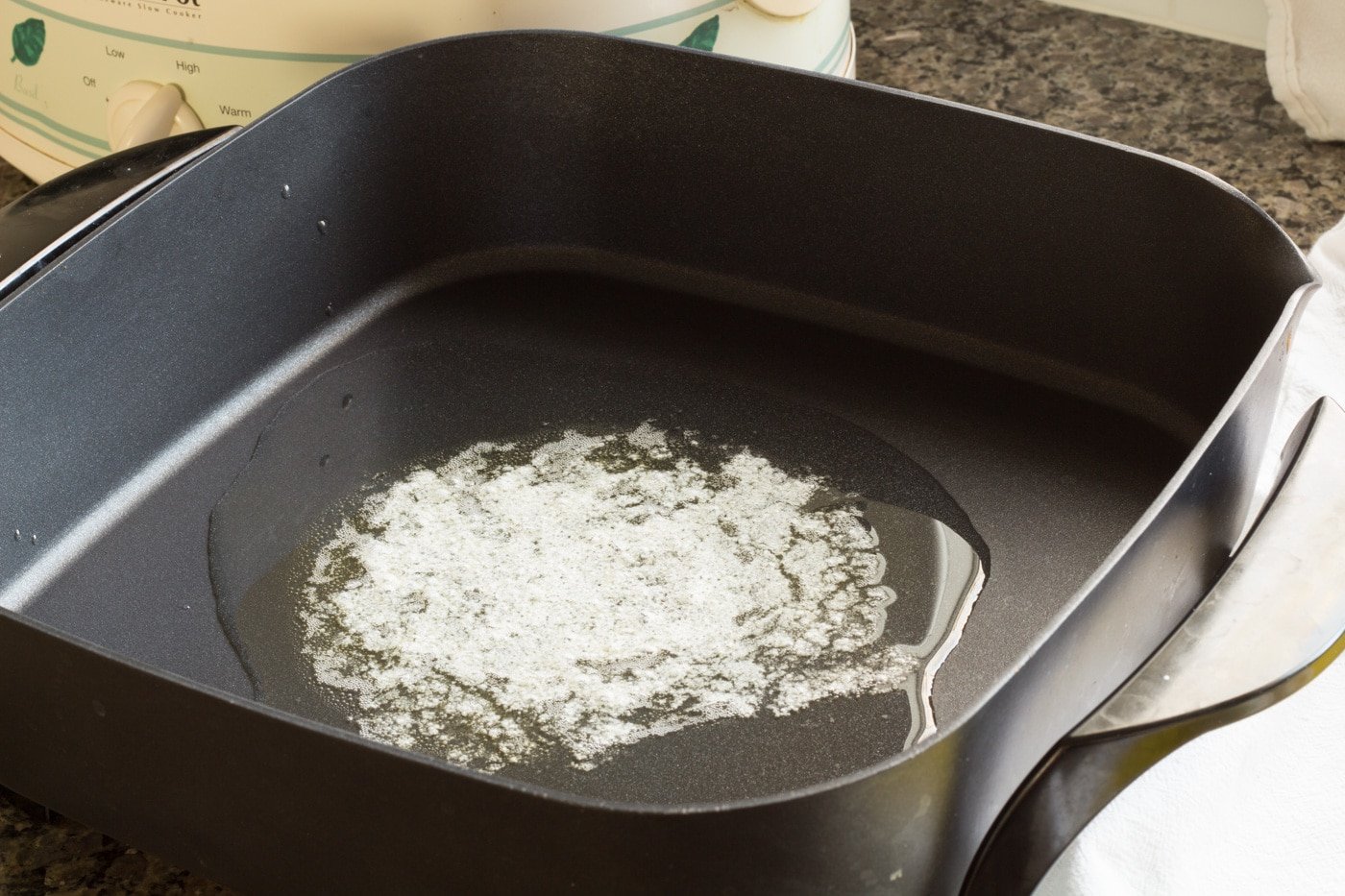
Once the oil is hot, add the onions, put the lid on the skillet, and walk away for 20 minutes. I know, the struggle is real, but walk away.
After 20 minutes stir and walk away again for another 20 minutes.
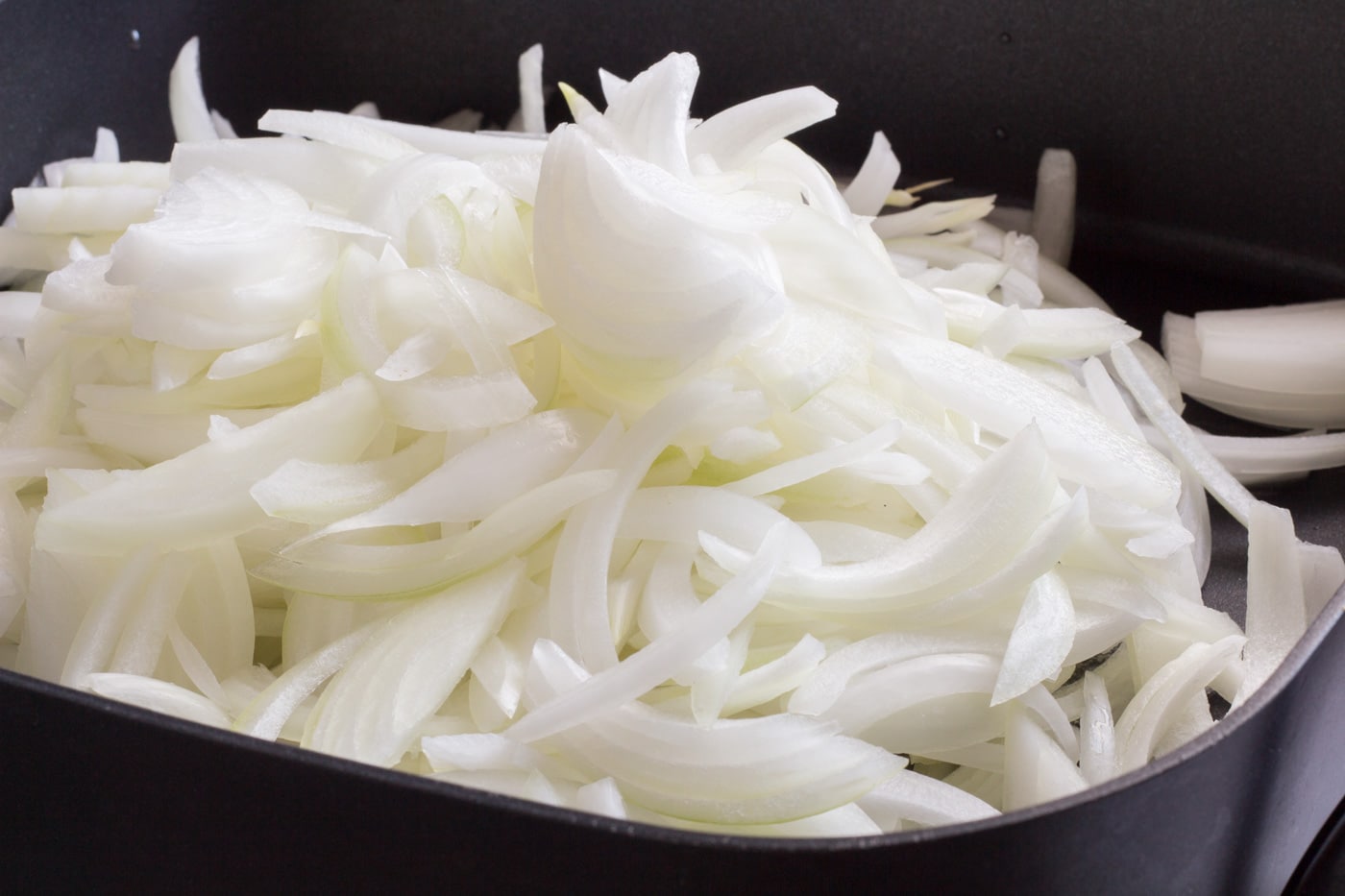
After 40 minutes, some of the onions should begin to lightly brown.

Now crack the lid to allow the steam to start escaping and stir every 10 minutes. As the liquid begins to evaporate, increase stirring to prevent burning.
Always remember to scrap the bottom of the pan to keep all that sugar from sticking to the bottom and burning. All that goodness down there will add a nice dark color to your onions too!
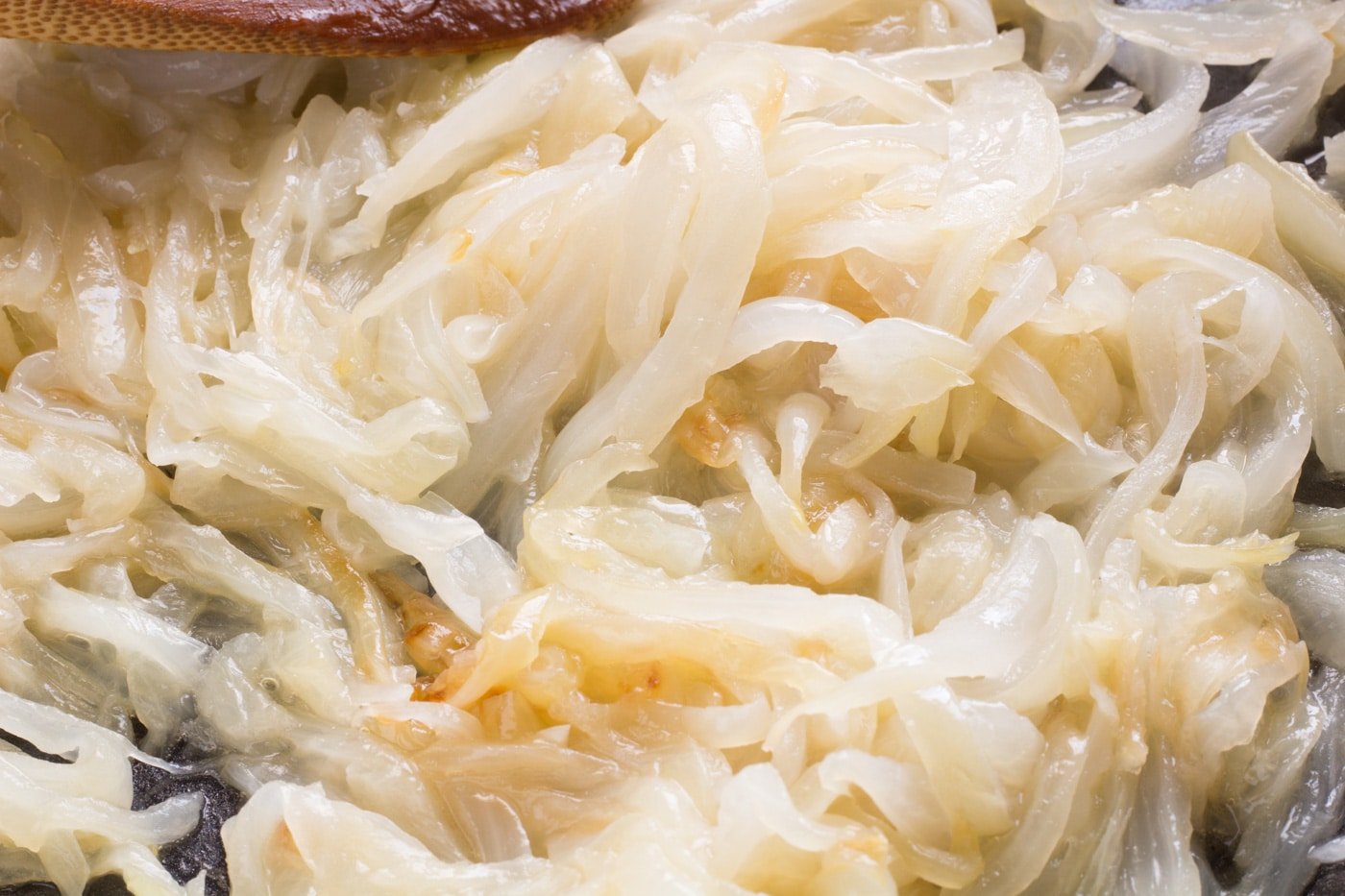
I set a timer, otherwise, I am likely to walk away and forget they are cooking.
You really need to stir these regularly to keep them all cooking evenly.
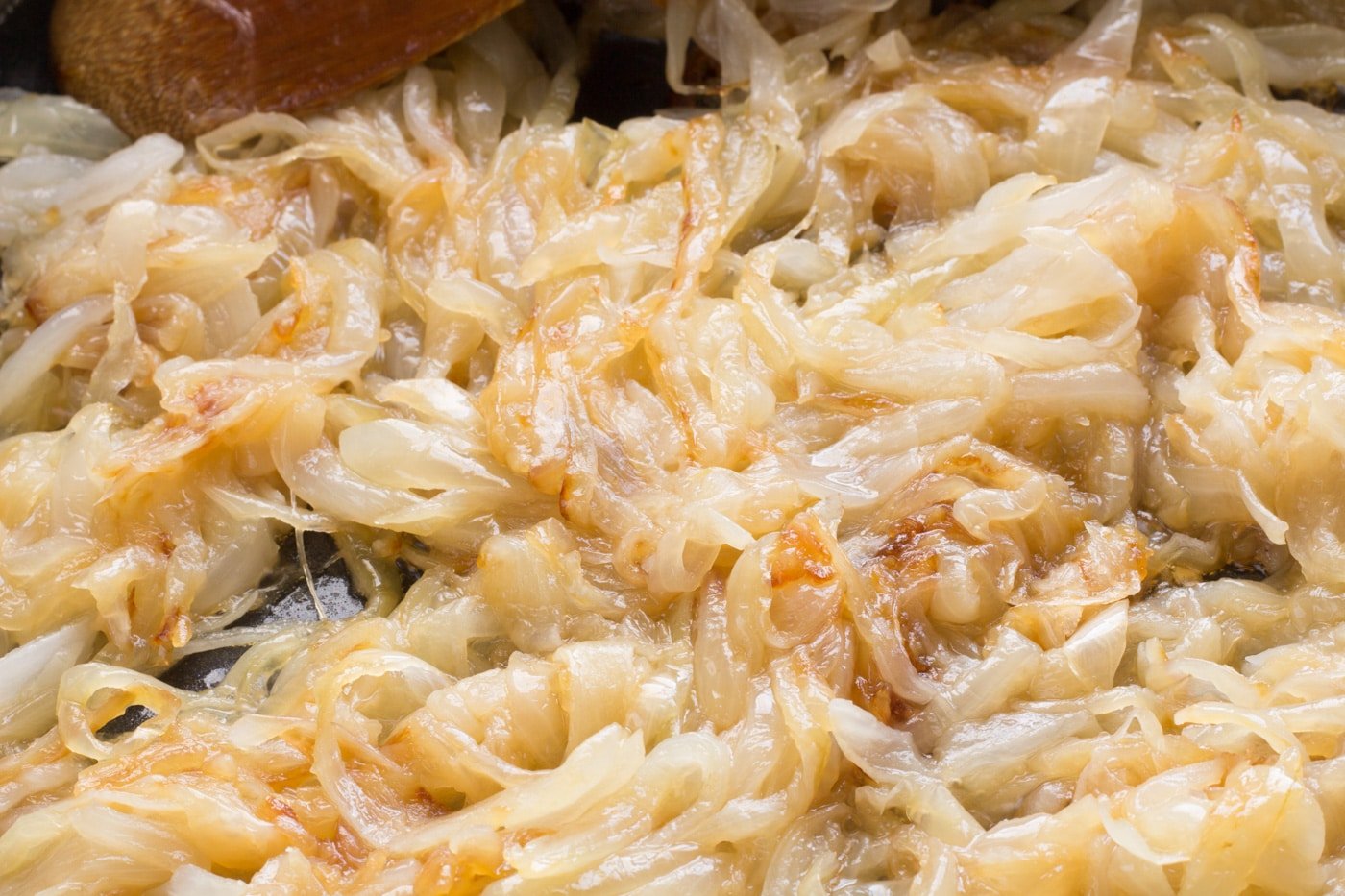
Some electric skillets run hotter than others, so you may need to adjust your temperature up just a tad to keep the onions at a very slow simmer.
Depending on how many onions you have in the skillet, the time to cook will take between 1 1/2 to 2 1/2 hours.
Just remember to keep moving the onions around to encourage even browning.
Stovetop Method
These can be made on a stovetop, but you want to make sure that the heat is never any higher than medium-low. Use the same method as using an electric skillet, but decrease the time for checking and stirring the onions by half.
This method will take less time but will need to be watched much closer. There really is a fine line between perfectly cooked and overcooked.
Slow Cooker Method
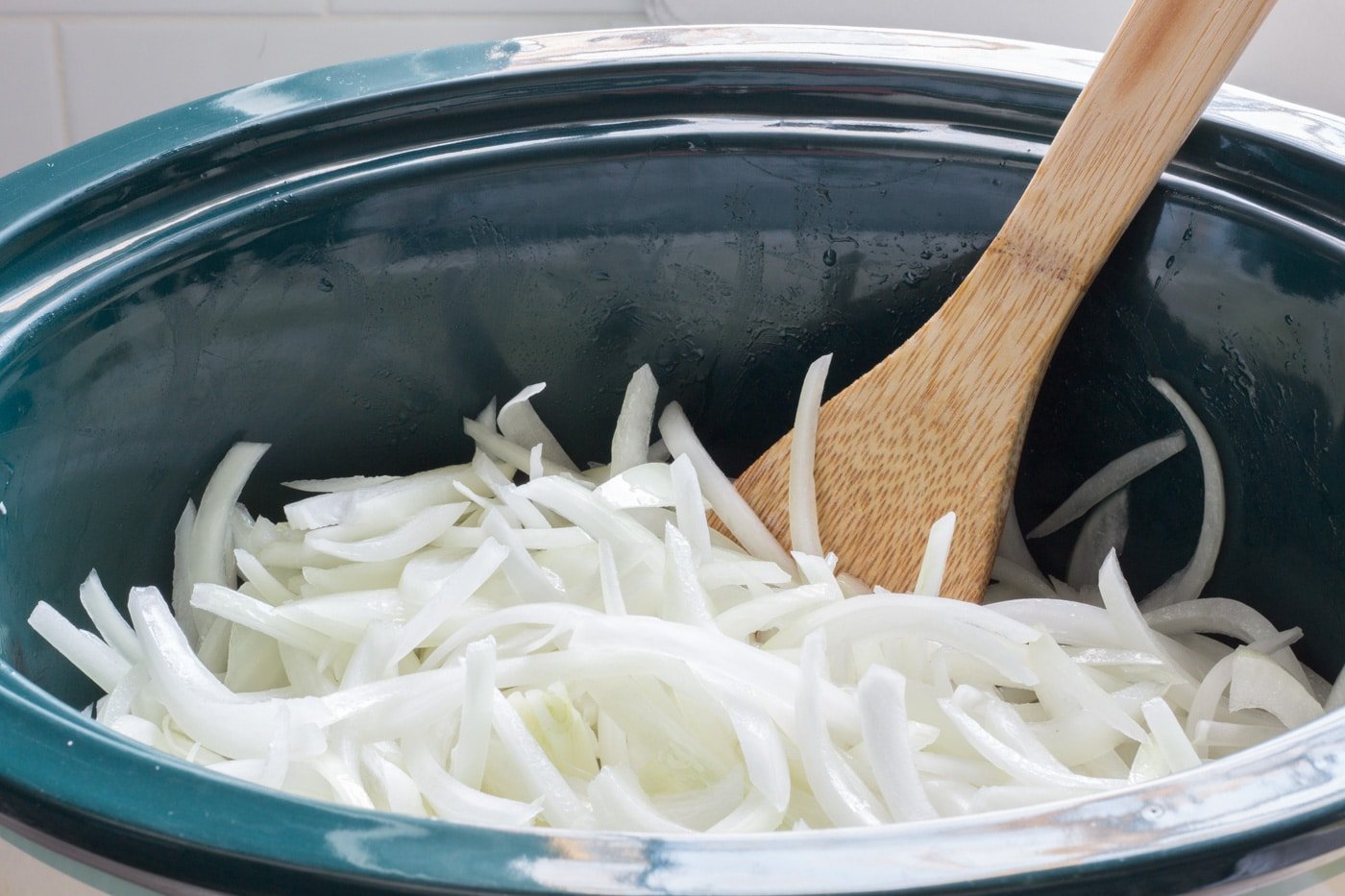
Mix the onions well with oil before turning on the slow cooker.
Set the slow cooker to high and stir every hour for the first 4 hours, then every half an hour until they are done.
This will take 6 to 8 hours depending on how quickly your crockpot heats up.
Alternatively, you can set the slow cooker to low and stir every 2 to 3 hours. It will take around 11 hours at low.
I do not like the slow cooker method because the sides of a slow cooker tend to get hot and any onions that are touching the sides tend to burn.
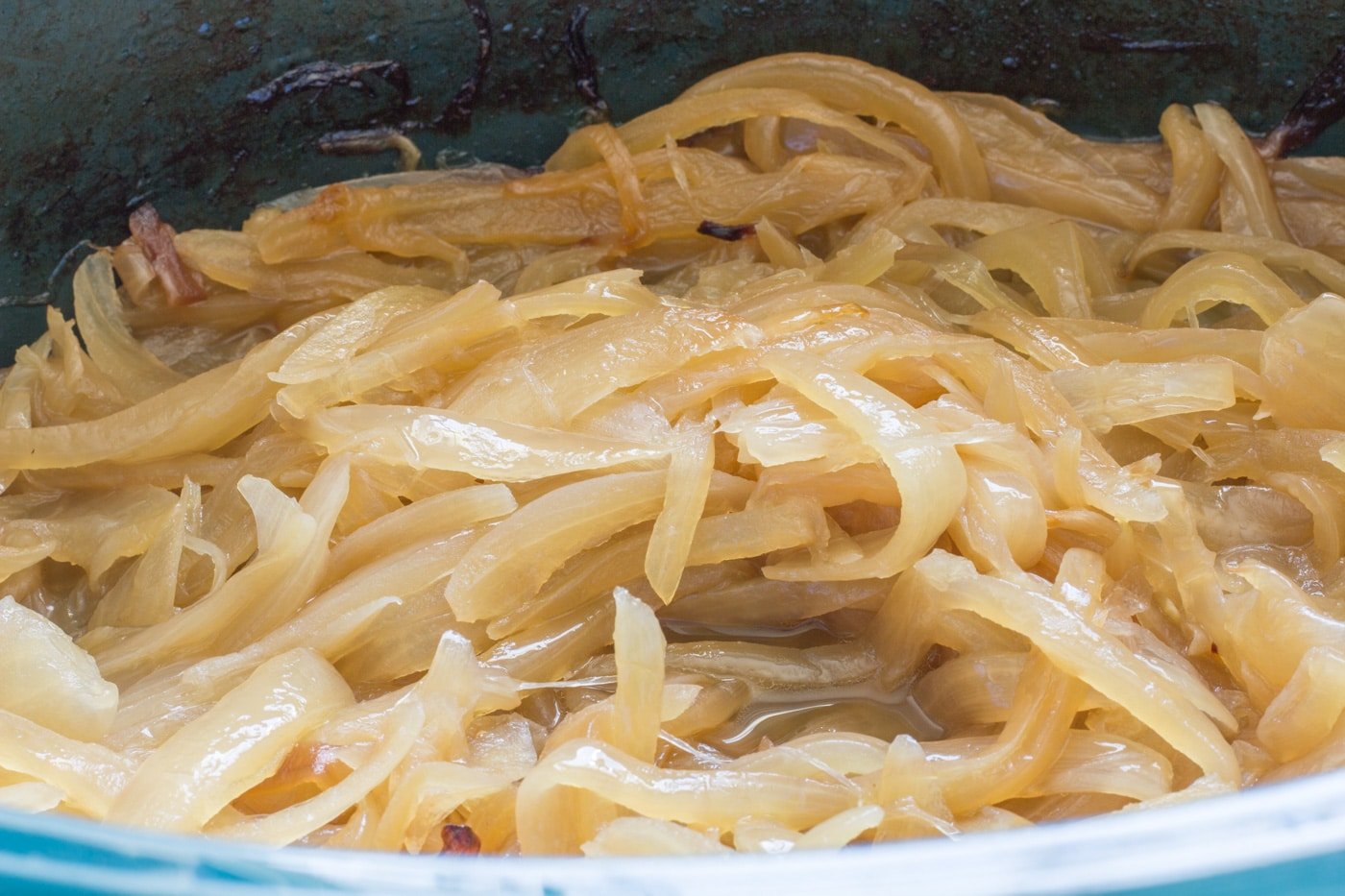
The onions come out more like steamed onions in my opinion.
Color When Done
If you have used the electric skillet or stovetop method, your onions should be dark brown.
When using the slow cooker your onions may never get past a pale brown color before you lose your patience.
The darker the color. The sweeter the onions will be. Just don’t go so far as to black-brown or they will taste burnt.
Tips for Success
- Low and Slow, do not be tempted to turn up the heat
- Do not add salt
- Do not add sugar
- Follow the suggested times for stirring
- Stir infrequently in the beginning, stir often near the end
- Do not walk away to do something else near the end, you’ll burn the onions you just spent 2 hours making!
Where to Use
- French Onion Soup – our favorite use
- Hamburgers
- Pizza Topping
- Bratwurst
- Hot Dogs
- Sandwiches
- Flatbread Topping

FOLLOW US ON SOCIAL MEDIA AND SHARE THIS RECIPE
SIGN UP TO RECEIVE NOTIFICATIONS AND NEVER MISS AN UPDATE
Caramelized Onions
Equipment
Ingredients
- 1 tablespoon olive oil
- 8 cups thinly sliced onions about 2 large onions
Instructions
- Heat olive oil in electric skillet set to 200 Degrees f.
- Add onions and cover, cook for 20 minutes.
- Stir, Cook for an additional 20 minutes covered.
- Stir, remove cover and cook another 20 minutes.
- As onions begin to brown stir every 5 to 10 minutes until all the onions are golden brown. This may take up to another 90 minutes.
Notes

Nutrition
Nutrition information is automatically calculated and may vary based on exact ingredients used. For accuracy, consult a registered dietitian or nutritionist.
Bless Alexa & you for keeping it real (& comical) in advising to set timers! These 3 onions, which are now a disheartening 1/2 cup of mush, would’ve been in the trash with the skillet 2 hours ago! The skillet definitely prevented me from being impatient & burning them on the stove so props to you for stating what to be prepared for & the consequences!
It’s taking every ounce of restraint to not salt them but I’m trusting ya & just put it on simmer after the 2 hour mark. I’m taste testing so much I won’t have any left! But I wouldn’t have any if it weren’t for your amusing directions so thank you! (I skipped over the onion cutting part so my 1/2” slices are probably the reason I’m at 2 hours lol). The struggle’s been real!!
Hi Raychel!
Thanks so much for your kind words! It makes my heart happy to know that some people find my extra information useful! I’m really glad you found a way to make your onions with less struggle. Lots of things get int he way of the time to cooking, if you are anywhere near Tulsa, or somewhere with our stifling heat and humidity, know that the humidity in the air may also cause the process to take a bit longer.
Thanks for stopping by again just to let us know how this “recipe” worked out for you.
I noticed in the picture that you use the exact same skillet that I have, the one with the flared out corner that’s supposed to be a easy pour “feature.” In your instructions it says to cook for 20 mins at a time with the lid on, then remove the lid to release the steam. How is it possible to hold in the steam in the first place since the lid doesn’t actually cover the skillet because of large gap that stays open in one corner?? Any meal that need to “cover and simmer” means it needs to cook with the lid fitted securely so hold the moisture and steam in throughout the cooking process. Especially since the onions need to cook for over an hour total, holding in the steam seems like it would be vital to not spending the time it takes to caramelize onions only to end up just wasting your time and your onions.
Good morning!
Even my electric skillets without the easy pour feature have vent holes. If it weren’t for these features, the steam would eventually build up enough pressure to raise your lid enough to let off some steam anyway. This is why when you are simmering something on the stove with a lid, the lid will rattle a bit. Pressure cookers and Instant Pots are the only cooking vessels I have that holds the steam without any escape. That’s why you have to let the pressure out or allow it cool before opening, otherwise it could explode when you try to take the lid off too soon. I’m no physicist, but if you want the full scientific explanation at a PhD level I could ask Ron to jump on here and give one. Hope this explanation helps!